Feminism For Dummies

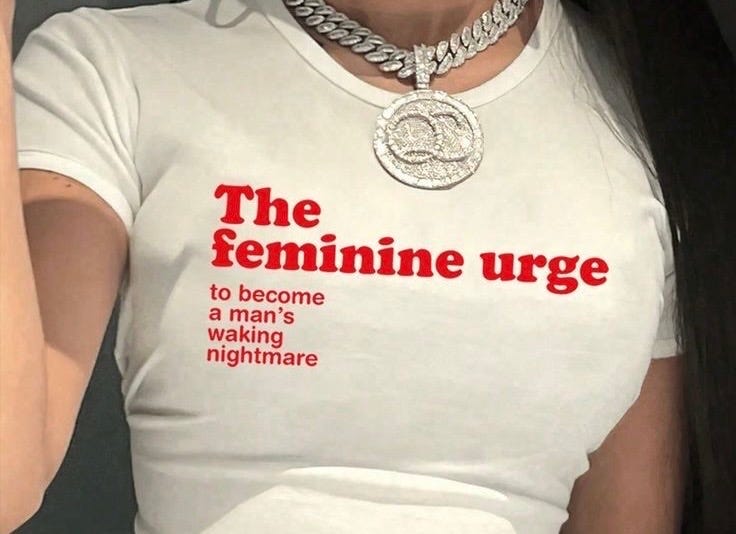
For years, many of us have identified as feminists with conviction. We have defended women in hostile rooms. We have built audiences around womanhood, autonomy, power. We have challenged pastors, politicians, uncles, husbands. We have said patriarchy is the problem. Yet some of us have never stopped to define it with precision. We understood the effects. We did not always articulate the structure.
Patriarchy is a social system in which men, as a class, hold disproportionate power across political, economic, religious, and domestic institutions, and masculinity is treated as the default standard of authority. It is not about whether an individual man is kind or cruel. It is about how power is organized.
In a patriarchal system:
Men are seen as natural leaders.
Women are expected to be supporters, helpers, caretakers.
Masculinity is associated with strength and logic.
Femininity is associated with softness and submission.
Authority flows downward from men.
The word comes from the Greek patriarkhēs, meaning “rule of the father.” But in practice, patriarchy is not about individual fathers. It is about power arranged along gender lines.
It shows up in:
Family systems where the man is automatically the head.
Inheritance structures that favor sons over daughters.
Religious leadership dominated by men.
Politics and corporate spaces where men hold the majority of power.
Cultural expectations that measure a woman’s success by marriage.
Patriarchy teaches that men lead and women follow. And when women refuse to follow, they are corrected, shamed, or even punished.
In a patriarchal society, leadership is coded male. Property ownership skews male. Religious authority is male-dominated. A woman’s value is tied to her marital status. Her ambition is treated as excess. Her assertiveness is treated as threat. Her sexuality is regulated. Her labor is expected. Her obedience is moralized.
This did not happen by accident. It was systemically designed. Patriarchy functions by normalizing hierarchy. It establishes male dominance as order, not preference. It presents inequality as tradition and control as protection. It also presents submission as virtue. Over time, repetition becomes culture. Culture becomes morality. Morality becomes divine will. What began as power consolidation is reframed as natural design.
The consequences are measurable. When girls are raised with narrower expectations than boys, their economic participation declines. When women are discouraged from leadership, governance suffers. When domestic labor is feminized and unpaid, national productivity is distorted. When a woman’s primary social currency is marriage, her bargaining power in every other sphere weakens. This is not sentimental analysis. It is structural reality. Society does not simply inconvenience women under patriarchy. It wastes them. Intellectual capital is underdeveloped. Entrepreneurial capacity is constrained. Political imagination is reduced. A nation that sidelines half it’s population cannot compete at full strength.
At this point, I know that there’s someone itching to argue that the problem has already been solved. Women are in the workplace. Women dominate sectors like medicine, law, banking, media, academia, even parts of tech. Women graduate from universities in record numbers. Women head institutions. Women hold sensitive political offices. The optics look progressive. The numbers appear encouraging. This begs the predictable question: why are we still talking about feminism?
Well, here’s the thing. Women may enter institutions, but they enter structures still designed around male norms. While ambition in men is expected, even encouraged; in women, it is scrutinized. A driven man is focused while a driven woman is aggressive. A decisive man is strong. But a decisive woman is difficult. The standards are not equal, even when the job titles are.
Women are told they can have everything, but at what cost? They are expected to excel professionally while remaining inherently domestic. They must build careers as if they have no family obligations and mother as if they have no professional aspirations. When they fall short in either domain, the judgment is swift and brutal. A man’s career dedication is him being responsible but a woman’s is selfishness. How many times have you heard people say “she kept chasing her career and success but failed to build a family”? When a woman chooses motherhood or prioritizes the home on her own terms, the condemnation does not go away. She is labeled as weak, unproductive, dependent. There is no correct way to woman under a system that demands women perform excellence in every sphere without structural support. We are told to choose, then punished for whichever choice we make.
Economic disparities remain. Across industries, women are grossly underpaid compared to men in similar roles. Leadership pipelines narrow as they rise. Boardrooms are still overwhelmingly male. Informal networks that control promotion and capital are still male-dominated. Token representation does not dismantle systemic imbalance.
Even more troubling is how deeply internalized patriarchy persists. Highly educated men and women still go around emphasizing harmful gender biases even in the workplace. Society still carries on believing that submission is a woman’s defining virtue regardless of her qualifications, income, or competence. Education without ideological interrogation simply produces polished patriarchy. Degrees do not automatically make a person progressive. My friend’s boss at work criticized her one day and told her he doubts she’ll be able to keep a husband. How does that relate to her work? I do not know.
So, no. The problem has not been solved. Do you see the trad-wife and divine femininity propaganda going on on social media? Good. That is the patriarchy fighting back using women as it’s foot soldiers. So the work of feminism is not done.
Patriarchy does not hurt only women. It wounds men too when it ties their worth to only provision and dominance. Boys are taught to suppress vulnerability. Patriarchy reduces masculinity to control and financial capacity. And men who fail economically are shamed as incomplete. Men who reject aggression are feminized as an insult. The very system that privileges men also imprisons them.
Feminism emerges as a response to this unfair structure. At its most precise, feminism is the political, social, and intellectual movement committed to dismantling patriarchal systems and securing equal rights and agency for women. It is not aesthetic rebellion but a structural critique of the injustice of the world. Feminism asserts that women are equal human beings. That their bodies are not owned property. That their labor must be valued. That their consent matters. That their access to education, capital, safety, and leadership cannot be contingent on male approval. Feminism is not asking to dominate men. It is only rejecting subordination.
In order to understand something clearly, you have to cut it open and really look at it inside. There are certain terms and language that been used carelessly within feminist spaces that we now have to dissect and define.
Gender
Gender is the set of social expectations attached to being male or female. It goes beyond biology. It is the social architecture built around biological difference. When society claims women are inherently nurturing or men are inherently rational, it is enforcing a script and that script determines opportunity and access.
Misogyny
Misogyny is not a mere dislike of women. It is contempt embedded in jokes, laws, hiring practices, sermons, and policy gaps that consistently disadvantage women.
Internalized Patriarchy
Internalized patriarchy is when women adopt and defend beliefs that harm women, when they police other women more aggressively than the system that restricts them.
For example:
When women shame other women for not enduring anything to “keep their marriage”
Victim blaming.
Enforcing a dangerous narrative that “Women are their own worst enemies.”
When oppressed people defend the system that limits them, patriarchy becomes self-sustaining.
Agency
Agency is the power to make choices about your own life. Feminism fights for women’s agency in education, career, sexuality, marriage, and motherhood.
The obstacles that stand in the way of feminism are formidable because they are deeply institutional. Take religion for example. Religion often sanctifies male authority. Even the “God” in nearly all religions is male. When hierarchy is framed as divine order, resistance is labeled rebellion against God. Another example is culture. Culture reinforces gendered expectations through rites, proverbs, family structures, and social reward systems. And then consider the Oga Kpata kpata of them all, Marriage.
Historically, marriage was structured around property, lineage, and control, not companionship; women moved from the authority of fathers to husbands, their names, homes, and often legal identities changing, while men remained rooted. Even though times have changed, the structure has not. Marriage is still treated as a woman’s ultimate validation. A single man is building, but a single woman is waiting; and no matter her achievements, the ultimate question still remains, “is she married?” It doesn’t matter whether is single and happy about it by choice. There’s no such thing as a happy single woman. Right?
A man enters marriage assumed complete; but a woman is treated as if marriage completes her. That imbalance shapes expectations like submission, disproportionate domestic labor, career compromise; even when she is equally or more accomplished. When a woman’s social status is tied to keeping a husband, her bargaining power weakens and her survival starts to depend on enduring that institution.
People need to understand that feminism does not reject or demonize marriage; it challenges a design that centers male authority and conditions female worth. Feminism insists that partnership must replace traditional hierarchy.
These obstacles injure the movement by distorting it. Feminism is framed as foreign contamination rather than a necessity. Feminism has often been accused of eroding family values and has been caricatured as hostility toward men. Women who speak are labeled bitter, arrogant, unfeminine, unmarriageable. The goal is to isolate advocates and make the cost of dissent high.
Consider the common accusations. “Feminism ruined households.” Households built on unilateral power were never stable. They were controlled. Stability without equality is compliance. Feminism does not attack family. It attacks coercion within family structures.
“Feminism promotes sexual irresponsibility.” Feminism promotes bodily autonomy. Autonomy includes responsibility. The discomfort arises because patriarchal systems relied on regulating female sexuality to maintain lineage control and social order. When women claim authority over their bodies, control shifts. That shift is interpreted as moral collapse.
“Feminists hate men.” Structural critique is not personal hatred. To analyze how power advantages men as a class is not to condemn every individual man. It is to identify systemic imbalance.
“Feminism is not African.” African women have resisted injustice long before global feminist language circulated widely. Resistance to exploitation, exclusion, and abuse is not imported ideology. It is human reflex against domination.
Why does feminism matter? Because no society achieves sustainable development while restricting the autonomy of half it’s population. Because economic growth, political stability, and social innovation require full participation. Because justice is not Western. It is foundational.
Feminism is for the girl denied school fees while her brother’s education is nonnegotiable. It is for the woman whose unpaid labor sustains a household without recognition. It is for the professional overlooked for promotion because leadership is presumed male. It is for the wife told her endurance is strength. It is also for the man suffocating under rigid definitions of masculinity that deny him emotional range.
If you are going to claim feminism, understand patriarchy as structure, not slogan. If you are going to oppose feminism, engage it’s actual arguments, not caricatures. Feminism is not just a trend or rebellion for the sake of rebellion. It is a demand that power be interrogated and redistributed where it has been unjustly concentrated. It is not asking women to dominate anyone. It is insisting they no longer be subordinated.
Capisce?
Really loved how you resisted the temptation to equate visibility with victory. The presence of women in boardrooms or political offices can create the appearance of resolution. But optics do not automatically translate into redistribution of power and some people (mostly men) have a really hard time understanding that!
Thank you so much for this piece